AI Warfare Explained: How Artificial Intelligence Is Transforming the Future of War
Introduction
War has always evolved alongside technology. From swords and bows to firearms and missiles, every generation has introduced new tools that changed how battles are fought.
Today, the next revolution in warfare is being driven by Artificial Intelligence (AI).
AI systems are now capable of analyzing massive amounts of data, detecting threats, guiding weapons, and even controlling autonomous machines. Because of these capabilities, military experts believe AI could reshape the battlefield more dramatically than any technology in the past century.
Governments around the world are investing billions of dollars in AI-powered defense systems. These systems promise faster decision-making, improved surveillance, and reduced risk for soldiers.
But this rapid advancement also raises an important question:
Has AI warfare already begun, and what does it mean for the future of global security?
What Is AI Warfare?
AI warfare refers to the use of artificial intelligence technologies in military operations and defense systems.
Traditional warfare relies heavily on human judgment. However, AI systems can analyze large datasets, recognize patterns, and provide strategic insights much faster than humans.
AI can assist militaries in several areas:
Intelligence analysis
Battlefield surveillance
Target recognition
Autonomous drone navigation
Cybersecurity and cyber attacks
Decision support systems
These technologies allow armed forces to respond faster and operate more efficiently in complex environments.
As modern battlefields become increasingly digital, the role of AI is expanding rapidly.
Why Countries Are Investing in AI Military Technology
Many countries believe AI will define the next era of military power.
There are several reasons why governments are investing heavily in AI warfare technologies.
Faster Battlefield Decisions
In modern combat, timing is critical. A few seconds can determine the outcome of a battle.
AI systems can analyze radar signals, satellite imagery, and surveillance data almost instantly. This allows military commanders to make faster and more informed decisions.
Protecting Soldiers
AI-powered machines can perform dangerous missions that would otherwise put soldiers at risk.
Examples include:
Bomb disposal robots
Reconnaissance drones
Autonomous ground vehicles
By using intelligent machines, militaries can reduce casualties and improve operational safety.
Data Analysis and Intelligence
Modern warfare generates enormous volumes of information. Satellite images, intercepted communications, and surveillance footage create huge datasets.
AI can quickly analyze these datasets and identify potential threats or unusual patterns.
This ability gives countries a major strategic advantage.
AI-Powered Military Drones
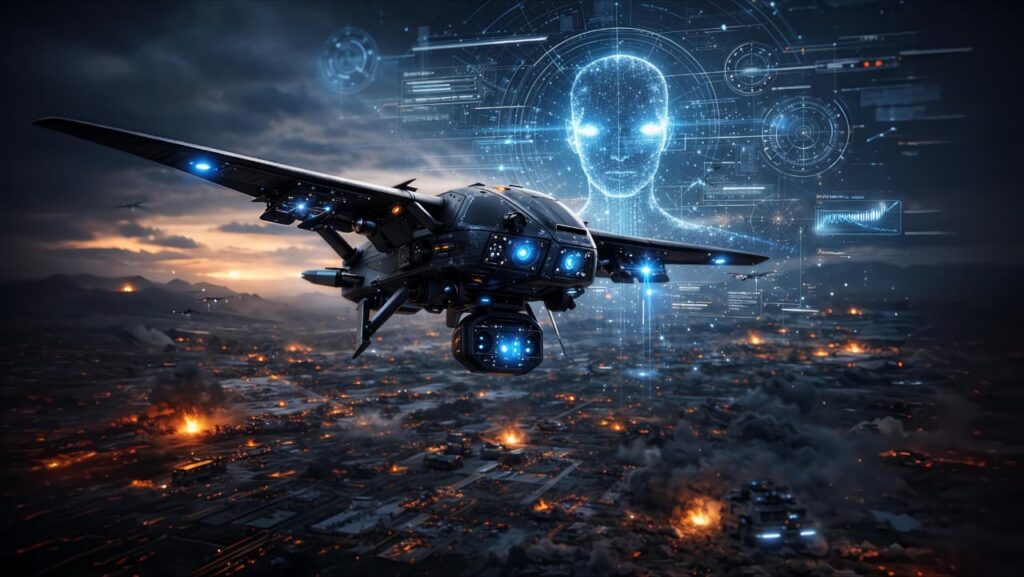
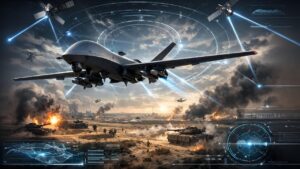
One of the most significant developments in AI warfare is the use of military drones.
Drones, also known as unmanned aerial vehicles (UAVs), have become essential tools for modern militaries.
AI technology enables drones to:
Identify and track targets
Navigate complex environments
Avoid obstacles
Coordinate with other drones
Some researchers are also developing drone swarms, where hundreds of small drones operate together like a coordinated unit.
Drone swarms could overwhelm traditional defense systems and dramatically change military tactics.
Autonomous Weapons and Their Impact
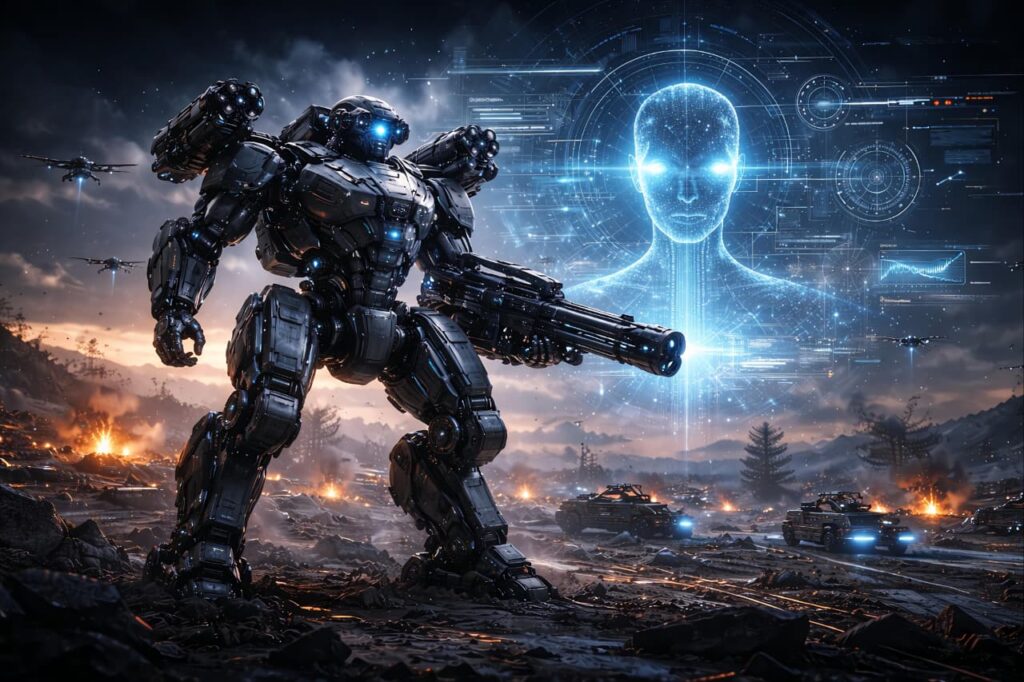
Autonomous weapons are systems that can detect and engage targets without direct human control.
These weapons use artificial intelligence algorithms to process sensor data and make decisions during combat.
Examples include:
Autonomous combat drones
Robotic military vehicles
AI-guided missile systems
Supporters argue that autonomous weapons can increase precision and reduce human errors.
However, critics warn that allowing machines to make lethal decisions raises serious ethical concerns.
Organizations around the world are calling for regulations to ensure responsible development of these technologies.
You can learn more about the ethical concerns of autonomous weapons from the United Nations discussion here:
https://www.un.org/disarmament/autonomous-weapons/
AI in Cyber Warfare

Cyber warfare has become one of the most important aspects of modern conflict.
Countries rely heavily on digital infrastructure such as:
electricity grids
banking systems
transportation networks
communication networks
AI can be used to both launch and defend against cyber attacks.
For example, AI systems can:
detect network vulnerabilities
automate hacking strategies
analyze cyber threats
strengthen digital defenses
Because cyber warfare often happens silently and without physical violence, AI plays a major role in detecting hidden attacks.
AI and Military Surveillance
Surveillance technology has advanced significantly with the help of AI.
Modern military surveillance combines multiple technologies, including:
satellites
drones
radar systems
facial recognition
AI algorithms can process these data sources quickly and identify potential threats.
For example, AI can detect suspicious troop movements or missile installations from satellite imagery.
This capability allows countries to monitor global security situations more effectively.
Ethical Concerns of AI Warfare
While AI offers powerful military advantages, it also raises serious ethical and legal concerns.
Loss of Human Judgment
One of the biggest concerns is that autonomous weapons could make life-and-death decisions without human oversight.
Risk of Rapid Escalation
AI systems can respond extremely quickly to threats. In some situations, this speed could increase the risk of accidental conflicts.
Accountability Problems
If an AI system makes a mistake during combat, determining responsibility becomes complicated.
Governments, engineers, and international organizations are still debating how to regulate AI warfare responsibly.
The Future of AI Warfare
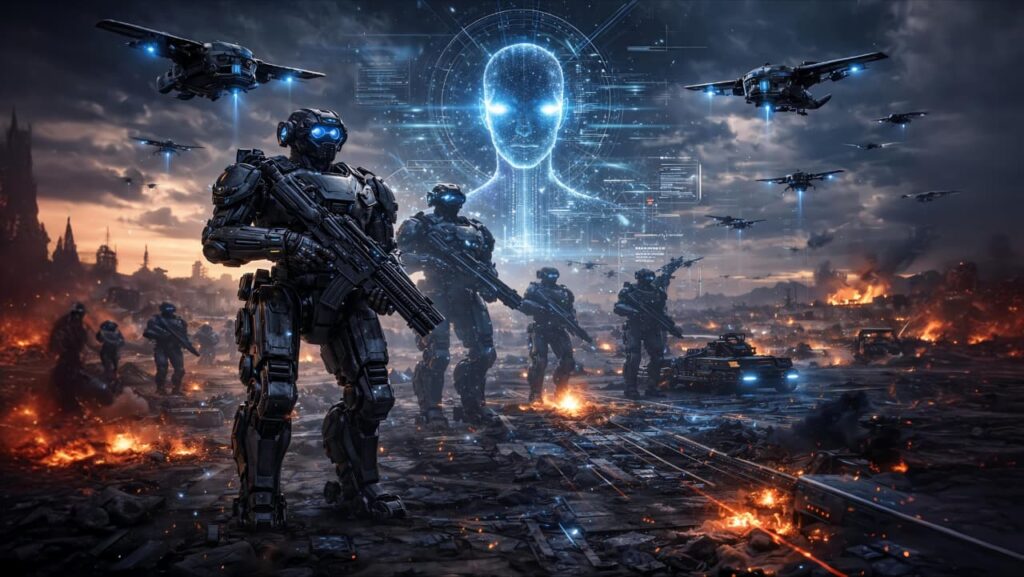
Artificial intelligence will likely become even more important in the coming decades.
Future military technologies may include:
AI-controlled drone swarms
autonomous submarines
robotic soldiers
advanced cyber warfare systems
At the same time, international agreements may be necessary to prevent uncontrolled AI arms races.
Balancing innovation with responsibility will be one of the biggest challenges of modern military technology.
According to research on Artificial Intelligence development, AI technology will play a major role in future military systems and autonomous warfare. Source: https://www.ibm.com/ai
Conclusion
Artificial intelligence is already transforming modern warfare.
From intelligent drones to advanced cyber defense systems, AI is becoming a central component of military strategy.
While these technologies provide powerful capabilities, they also introduce new ethical and security challenges.
The future of warfare will not only depend on technological advancements but also on how responsibly governments choose to develop and regulate AI systems.
Understanding AI warfare today is essential for preparing for the security challenges of tomorrow.
AI is rapidly transforming many aspects of our world, from military technology to digital creativity. If you’re interested in how AI is helping content creators, read our article Best Free AI Tools for YouTubers to Create Videos Faster and Grow Your Channel.
FAQ
What is AI warfare?
AI warfare refers to the use of artificial intelligence in military operations, including drones, surveillance systems, cyber warfare, and autonomous weapons.
How is AI used in the military?
AI is used for intelligence analysis, target recognition, autonomous navigation, cybersecurity, and decision-making support.
Are AI weapons already being used?
Yes, many militaries already use AI in drones, surveillance systems, and cybersecurity platforms.
Can AI replace human soldiers?
AI may assist soldiers and automate certain tasks, but humans will likely remain essential in military decision-making.