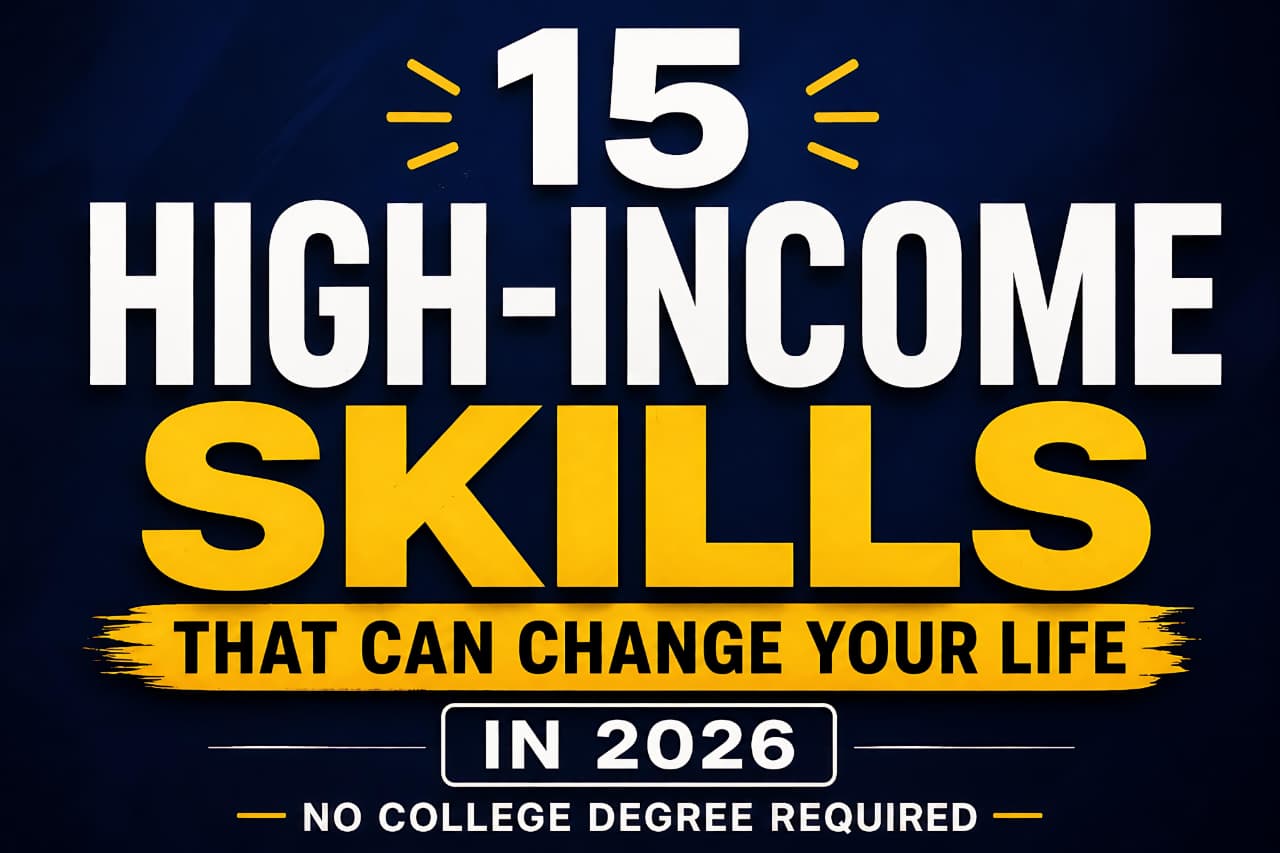
The job market is changing faster than ever. Many companies now care more about practical skills than college degrees. Employers want people who can solve problems, communicate effectively, and deliver results.
In fact, freelancing and online work continue to grow rapidly across the United States. Industry reports suggest that freelance work is becoming a major part of the workforce, creating more opportunities for people who develop valuable skills.
The good news is that you don’t need a four-year degree to build a high-income career. Many people are earning a full-time income by learning practical skills that businesses actively need.
According to the Occupational Outlook Handbook, many skill-based careers are expected to remain in demand as employers continue to prioritize practical abilities and real-world experience.
Here are 15 high-income skills that can help you build a successful future in 2026 and beyond.
1. Digital Marketing
Every business wants more customers. Digital marketers help companies attract visitors, generate leads, and increase sales through online channels.
Key areas include:
- Search Engine Optimization (SEO)
- Social Media Marketing
- Email Marketing
- Content Marketing
- Paid Advertising
Businesses of all sizes depend on digital marketing, making it one of the most valuable skills in today’s economy.
Content creators can also explore How to Create Online Income Using ChatGPT to build additional income streams.
2. Copywriting
Copywriting is the skill of writing words that persuade people to take action.
Examples include:
- Sales pages
- Product descriptions
- Email campaigns
- Advertisements
- Landing pages
Companies are willing to pay well for writers who can increase conversions and sales.
3. Search Engine Optimization (SEO)
SEO helps websites rank higher on Google.
A skilled SEO specialist understands:
- Keyword research
- On-page optimization
- Link building
- Technical SEO
- Content strategy
As businesses continue competing online, SEO remains one of the most profitable digital skills.
4. Video Editing
Video content dominates the internet.
Brands, influencers, YouTubers, and businesses constantly need editors who can create engaging videos.
Popular tools include:
- Adobe Premiere Pro
- Final Cut Pro
- DaVinci Resolve
Video editing can become a highly profitable freelance or full-time career.
5. Graphic Design
Strong visual content helps businesses stand out.
Graphic designers create:
- Logos
- Social media graphics
- Marketing materials
- Website visuals
- Brand identities
Design skills remain valuable across almost every industry.
6. Web Development
Every company needs a website.
Web developers build and maintain websites using technologies such as:
- HTML
- CSS
- JavaScript
- WordPress
- React
Web development continues to be one of the highest-paying skills in the digital economy.
7. Sales
Sales is one of the oldest and most valuable skills in business.
If you can help a company generate revenue, your earning potential can be extremely high.
Top sales professionals often earn commissions in addition to their base salary.
8. Content Creation
Content creators build audiences through:
- Blogs
- YouTube channels
- Podcasts
- Social media platforms
Many creators earn income through advertising, sponsorships, affiliate partnerships, and digital products.
Creators can improve productivity with 7 Free AI Apps for Smartphones.
The creator economy continues to expand as more businesses invest in online content.
9. Social Media Management
Businesses need professionals who can manage their online presence.
Responsibilities often include:
- Content planning
- Audience engagement
- Growth strategies
- Analytics reporting
Many small businesses prefer hiring freelancers rather than building an in-house team.
10. Data Analysis
Companies collect enormous amounts of data.
Data analysts help organizations:
- Understand customer behavior
- Improve business performance
- Make better decisions
Learning tools like Excel, SQL, and Power BI can create strong career opportunities.
11. Project Management
Project managers ensure that teams complete projects efficiently and on schedule.
Important skills include:
- Communication
- Organization
- Leadership
- Time management
Strong project managers are highly valued in technology, healthcare, construction, and business sectors.
12. Email Marketing
Email marketing continues to generate strong returns for businesses.
Professionals in this field create:
- Newsletters
- Sales campaigns
- Automated email sequences
- Customer retention strategies
Businesses often see email as one of their highest-performing marketing channels.
13. Financial Planning
Financial literacy is becoming increasingly important.
Financial planners help people:
- Manage budgets
- Build savings
- Plan investments
- Prepare for retirement
As personal finance awareness grows, demand for knowledgeable professionals continues to increase.
14. UX/UI Design
User experience and user interface design focus on making websites and apps easier to use.
UX/UI designers help businesses improve:
- Customer satisfaction
- Conversion rates
- Product usability
The demand for user-focused digital products keeps this skill highly relevant.
15. Communication and Leadership
Technical skills matter, but communication often determines long-term success.
Strong communicators can:
- Lead teams
- Negotiate effectively
- Build relationships
- Solve workplace challenges
These skills remain valuable regardless of industry or economic changes.
How to Choose the Right Skill
Instead of trying to learn everything, focus on one skill that matches your interests and strengths.
Ask yourself:
- What type of work do I enjoy?
- Do I prefer creative or technical work?
- Am I interested in freelancing or employment?
- How much time can I dedicate to learning?
Consistency matters more than speed.
How Long Does It Take to Learn a High-Income Skill?
Most people can develop beginner-level proficiency within 3 to 6 months of focused learning.
A simple roadmap:
Month 1
Learn the fundamentals.
Month 2–3
Practice daily and build small projects.
Month 4–6
Create a portfolio and start applying for opportunities.
The people who succeed are usually the ones who continue learning and improving over time.
Understanding modern AI systems becomes easier with Multimodal AI Explained.
How to Start Learning High-Income Skills in 2026
High-Income Skills continue to grow in demand because businesses increasingly value practical expertise over traditional qualifications. Developing High-Income Skills can open opportunities for freelancing, remote work, entrepreneurship, and long-term career growth.
Final Thoughts
A college degree can be valuable, but it is no longer the only path to a successful career. The modern economy rewards people who develop useful skills and consistently provide value.
Whether you choose digital marketing, web development, sales, video editing, SEO, or content creation, the most important step is getting started.
Pick one skill, commit to learning it, and focus on improving every day. A single high-income skill can completely change your career, increase your earning potential, and create opportunities that were impossible just a few years ago.
People interested in future career opportunities should also learn What Is Agentic AI.
Frequently Asked Questions (FAQ)
1. What are high-income skills?
High-income skills are valuable abilities that can help you earn a higher salary, freelance income, or business revenue. Unlike traditional qualifications, these skills focus on delivering measurable results for employers or clients. Examples include digital marketing, web development, sales, copywriting, and project management.
2. Can I learn high-income skills without a college degree?
Yes. Many high-income skills can be learned through online courses, self-study, hands-on practice, and real-world projects. Today, many employers prioritize skills and experience over formal education.
3. Which high-income skill is best for beginners?
Some beginner-friendly high-income skills include:
- Digital Marketing
- Content Creation
- Social Media Management
- Copywriting
- Video Editing
These skills often have a lower barrier to entry and can be learned without advanced technical knowledge.
4. How long does it take to learn a high-income skill?
The timeline varies depending on the skill and your learning commitment. Most people can develop basic proficiency within 3 to 6 months with consistent practice. Advanced expertise may take one to two years of real-world experience.
5. What is the highest-paying skill in 2026?
There is no single highest-paying skill for everyone. However, web development, data analysis, sales, project management, and UX/UI design are among the skills that consistently offer strong earning potential across multiple industries.
6. Are high-income skills future-proof?
No skill is completely future-proof, but skills such as communication, leadership, sales, problem-solving, and digital expertise remain highly valuable because businesses will continue to need them regardless of technological changes.
7. Can high-income skills help me start a freelance career?
Yes. Many professionals use skills like graphic design, copywriting, video editing, SEO, and web development to build successful freelance careers. Freelancing offers flexibility and the opportunity to work with clients from around the world.