Instagram End-to-End Encryption Removed: What Really Happened?
For years, privacy advocates considered End-to-End Encryption (E2EE) one of the most important security features available in modern messaging apps. It ensured that conversations remained private, protected from hackers, unauthorized access, and even the platform itself.
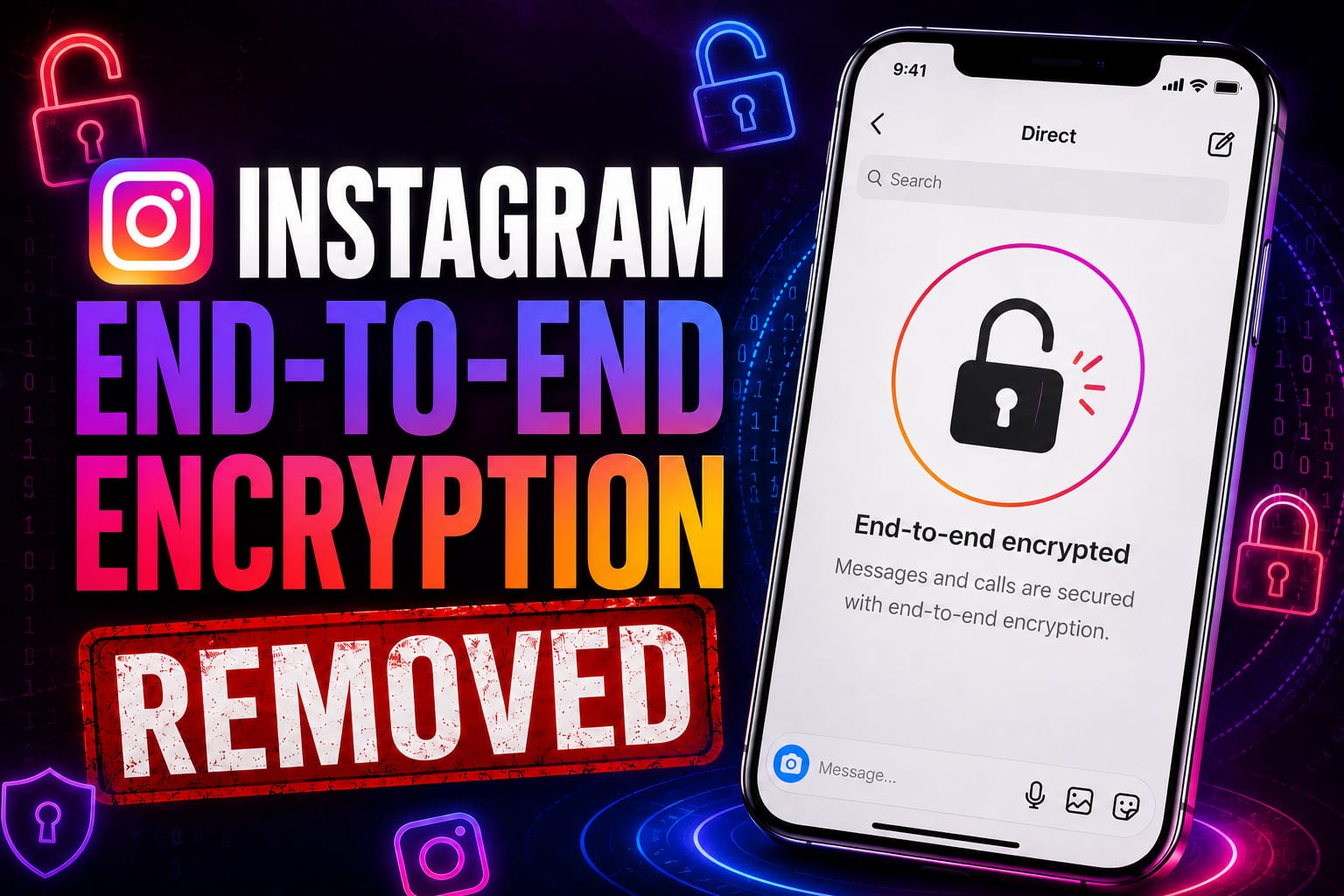
Instagram, owned by Meta, gradually introduced encrypted messaging as part of its long-term vision for secure communication across its ecosystem. However, in 2026, Meta officially discontinued Instagram’s End-to-End Encrypted Direct Messages, triggering widespread debate about privacy, online safety, law enforcement access, and the future of secure messaging.
The move immediately raised questions among users. Why was Instagram End-to-End Encryption removed? What happens to private messages now? Can Meta read conversations? Are users less protected than before?
This article explains everything you need to know, including the complete timeline, official reasons, privacy concerns, expert reactions, benefits, drawbacks, and the future of Instagram messaging.
What Is Instagram End-to-End Encryption?
End-to-End Encryption is a security technology that protects messages from being viewed by anyone except the sender and recipient. Meta provides additional details about encrypted messaging in its Privacy Center.
Link:
https://privacycenter.instagram.com/
When E2EE is enabled:
- Messages are encrypted before leaving the sender’s device.
- Data remains encrypted while passing through servers.
- Only the recipient’s device can decrypt the message.
- Even the service provider cannot access message content.
This system became the gold standard for private communication because it minimizes the risk of unauthorized access.
The Complete Timeline of Instagram End-to-End Encryption
2020: Meta Begins Testing Encrypted Instagram DMs
Meta first started testing End-to-End Encryption for Instagram Direct Messages in 2020.
Initially, the feature was optional and available only to selected users. The company described it as part of a broader effort to unify Instagram and Messenger messaging systems while improving privacy protections.
2021–2022: Expansion and Development
During the following years, Meta expanded testing and improved the underlying infrastructure.
Key developments included:
- Cross-platform messaging support
- Multi-device compatibility
- Secure encrypted backups
- Improved account recovery systems
These updates were necessary before encryption could be offered to a larger user base.
December 2023: Encryption Becomes the Default
In late 2023, Meta announced one of the biggest privacy changes in its history.
End-to-End Encryption became the default experience for many Messenger and Instagram conversations.
The company promoted this move as a major privacy enhancement that would help protect billions of personal conversations worldwide.
For privacy advocates, it was considered a significant step forward.
March 2026: Meta Announces the Shutdown
In March 2026, reports emerged that Meta planned to discontinue Instagram’s End-to-End Encrypted Direct Messages.
The announcement surprised many users because Meta had spent years developing and promoting encrypted messaging.
May 8, 2026: Official Removal
On May 8, 2026, Meta officially discontinued Instagram’s End-to-End Encrypted Direct Messages. Users were directed to review the latest privacy and messaging documentation available through Meta’s official support channels.
Link:
https://help.instagram.com/
Users with encrypted chats were encouraged to download or back up any conversations they wished to keep before the shutdown took effect.
This marked the end of Instagram’s E2EE messaging system.
Why Did Meta Introduce End-to-End Encryption?
Before understanding why the feature was removed, it is important to understand why it was introduced.
User Privacy
The primary goal was protecting private conversations.
Users increasingly expected platforms to provide stronger privacy protections against unauthorized access.
Protection Against Data Breaches
Even if attackers gained access to company servers, encrypted messages would remain unreadable without the decryption keys.
This significantly reduced the risk of mass exposure during security incidents.
Industry-Wide Shift Toward Privacy
Companies across the technology industry were investing heavily in privacy-focused communication tools.
Meta viewed encrypted messaging as a critical part of the future of online communication.
Secure Personal and Business Communication
Encryption provided additional protection for:
- Personal conversations
- Business discussions
- Financial information
- Journalistic communications
- Sensitive professional exchanges
Why Did Meta Remove Instagram End-to-End Encryption?
This remains the most controversial aspect of the entire story.
Meta’s public explanation focused on practical and operational considerations, but privacy experts believe multiple factors contributed to the decision.
Official Reason: Low User Adoption
According to statements reported by multiple technology publications, Meta indicated that encrypted Instagram chats were used by a relatively small percentage of users.
Maintaining a separate encryption infrastructure for a feature with limited adoption reportedly became difficult to justify.
From Meta’s perspective, users seeking encrypted communication could continue using WhatsApp, which still offers End-to-End Encryption by default.
Child Safety Concerns
One of the strongest arguments against widespread encryption came from child protection organizations.
Their concern was simple:
If platforms cannot read messages, detecting harmful activity becomes significantly more difficult.
This includes:
- Child exploitation
- Online grooming
- Sextortion schemes
- Abuse networks
Safety groups argued that stronger moderation tools were necessary to combat these threats.
Fraud and Scam Prevention
Instagram has become a major target for scammers.
Common scams include:
- Cryptocurrency fraud
- Investment schemes
- Romance scams
- Impersonation attacks
Security systems often rely on content analysis to identify suspicious behavior.
Encryption limits the visibility available to those systems.
Artificial Intelligence Moderation Challenges
Meta increasingly relies on artificial intelligence to identify harmful content.
AI systems help detect:
- Spam
- Harassment
- Fraud
- Threats
- Illegal activity
When conversations are encrypted, AI cannot directly analyze message content.
This creates significant moderation challenges.
Understanding how AI systems analyze different types of content becomes easier when you learn about Multimodal AI Explained.
Government and Regulatory Pressure
Governments around the world have spent years debating encrypted communication.
Law enforcement agencies have argued that strong encryption can make criminal investigations more difficult.
Their position is that platforms should retain some ability to assist investigations involving serious crimes.
Privacy advocates strongly disagree, arguing that weakening encryption puts ordinary users at risk.
Modern AI-powered moderation systems are also discussed in Latest Google Updates Explained.
The Benefits of Instagram End-to-End Encryption
Before its removal, E2EE provided several major advantages.
Strong Privacy Protection
Only participants in a conversation could access message content.
Better Security Against Cybercriminals
Hackers intercepting encrypted traffic would be unable to read messages.
Protection for Journalists and Sources
Confidential communications could remain private.
Business Confidentiality
Companies could discuss sensitive projects without exposing information to third parties.
Reduced Data Exposure
Even in the event of a server breach, encrypted messages remained protected.
What Users Lose Without Instagram End-to-End Encryption
The removal of E2EE changes the privacy model.
While messages are still protected during transmission, the overall level of privacy is reduced compared to End-to-End Encryption.
Users lose:
- Maximum message confidentiality
- Protection from platform-level message access
- Stronger safeguards against unauthorized disclosure
Can Meta Read Instagram Messages Now?
This is the question most users are asking.
Protecting messages is only one part of online security, and users should also learn How to Protect Your Personal Data Online.
Can Meta Read Instagram Messages Now?
This is the question most users are asking.
Without End-to-End Encryption, Meta may technically have greater ability to access message content under specific circumstances.
However, this does not mean Meta employees are manually reading user conversations.
Access remains governed by:
- Privacy policies
- Internal controls
- Security procedures
- Legal obligations
The key difference is that the platform is no longer completely prevented from accessing message content by encryption itself.
What About Instagram Video Calls?
Many users worry that Meta can now watch video calls.
There is currently no evidence that Instagram automatically records and stores every video call.
However, platforms may retain metadata such as:
- Call participants
- Call duration
- Date and time
- Device information
If a video call is not recorded and stored, it generally cannot be replayed later.
Who Is Most Affected by This Change?
Journalists
Confidential source protection becomes more challenging.
Activists
Sensitive communications may face increased privacy concerns.
Business Professionals
Confidential business discussions require greater caution.
Researchers and Whistleblowers
Secure communication becomes more difficult.
Everyday Users
Most users may notice little difference in day-to-day conversations, but privacy protections are reduced.
Professionals who rely on secure online accounts should also understand How to Protect Your Google Account.
Privacy vs Safety: The Debate Continues
The removal of Instagram End-to-End Encryption has reignited the global debate between privacy and online safety.
Privacy advocates argue:
- Strong encryption protects users.
- Secure communication is a fundamental right.
- Weakening encryption creates security risks.
Safety advocates argue:
- Platforms need tools to combat abuse.
- Criminal activity can hide behind encryption.
- Child protection should remain a priority.
Both perspectives continue to shape the future of online communication.
What Happens Next?
Several outcomes are possible.
More Advanced AI Safety Systems
Meta may continue investing heavily in automated moderation technologies.
Increased Privacy Demands
Users may push for stronger privacy options in future updates.
Growth of Alternative Platforms
Privacy-focused apps may see increased adoption.
Popular alternatives include:
- Signal
- Telegram
Continued Regulatory Debates
Governments and technology companies will likely continue debating the balance between privacy and public safety.
Future privacy technologies may increasingly rely on concepts discussed in What Is Agentic AI.
Final Thoughts
The removal of Instagram End-to-End Encryption marks one of the most significant changes in the platform’s messaging history.
What began as a major privacy initiative in 2020 ultimately ended on May 8, 2026, after years of development, expansion, and controversy.
Supporters of encryption see the move as a setback for digital privacy. Supporters of stronger moderation view it as a necessary step toward improving online safety.
Regardless of where users stand, the decision highlights one of the most important questions facing the technology industry today:
How can platforms protect user privacy while also preventing abuse, fraud, and criminal activity?
The answer will likely shape the future of online communication for years to come.
Many privacy experts believe Instagram End-to-End Encryption was one of the most significant security features ever introduced to Instagram messaging.
Frequently Asked Questions (FAQ)
When did Instagram introduce End-to-End Encryption?
Instagram began testing End-to-End Encryption for Direct Messages in 2020 and expanded the feature over the following years.
When did End-to-End Encryption become the default?
Meta rolled out default encryption for many Instagram and Messenger conversations during late 2023.
When was Instagram End-to-End Encryption removed?
Reports indicate that Meta officially discontinued Instagram’s End-to-End Encrypted Direct Messages on May 8, 2026.
Can Meta read Instagram messages now?
Without End-to-End Encryption, Meta may have greater technical ability to access message content under specific circumstances, subject to policies and legal requirements.
Are Instagram video calls automatically recorded?
There is no public evidence suggesting that all Instagram video calls are automatically recorded and stored.
What is the best alternative to Instagram encrypted messaging?
Many privacy experts recommend apps such as Signal and WhatsApp for secure communication.
Is Instagram End-to-End Encryption still available?
No. Instagram End-to-End Encryption for Direct Messages was officially discontinued on May 8, 2026, according to reports covering Meta’s decision.