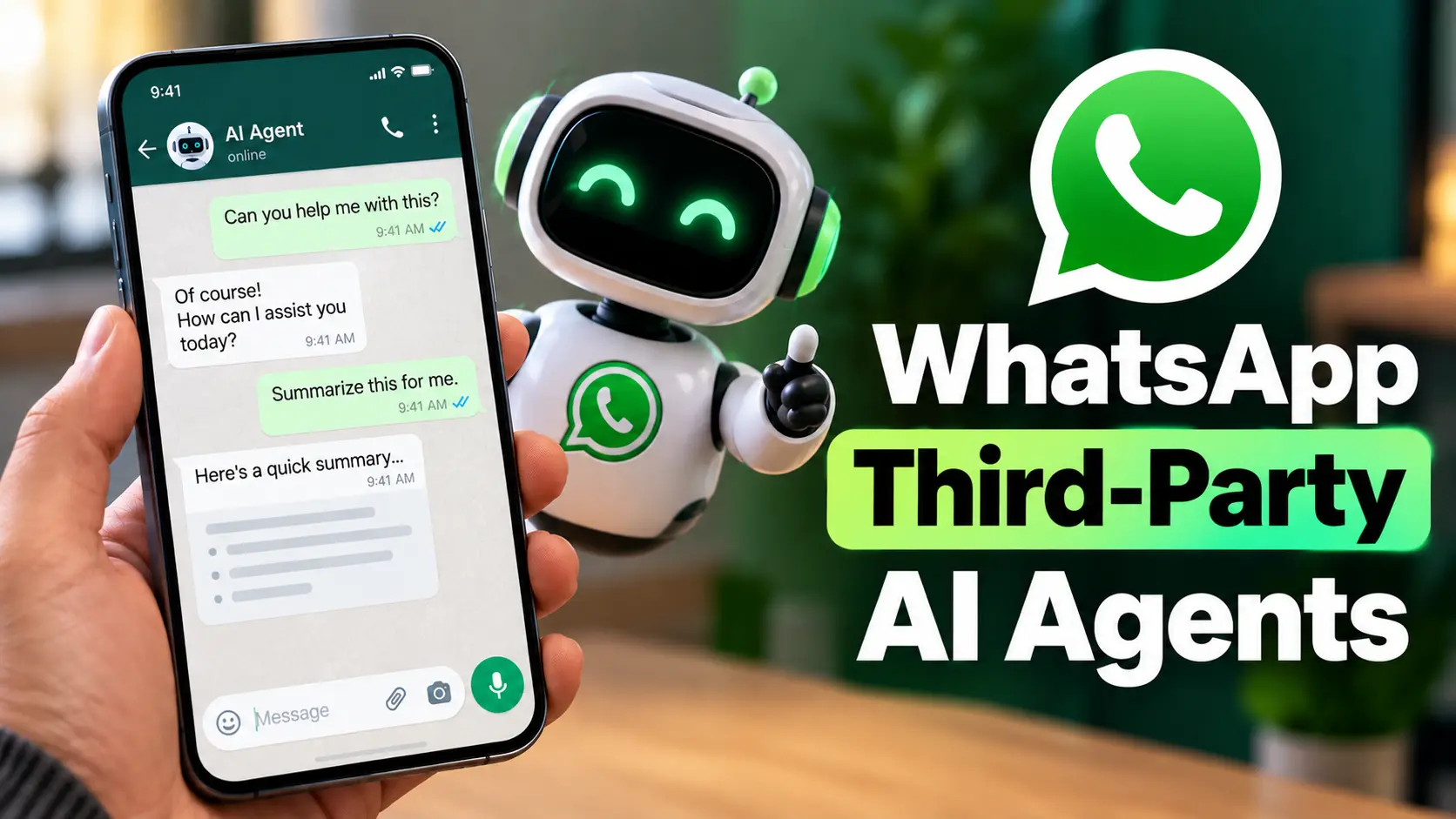
WhatsApp is expanding beyond traditional messaging with new artificial intelligence features. One of the newer developments is the ability to chat with WhatsApp Third-Party AI Agents directly through the messaging platform.
These AI agents are not built or operated by WhatsApp. Instead, they are created and managed by independent developers or companies. WhatsApp provides the technical platform that allows these agents to communicate with users through WhatsApp.
The feature could make it easier to access AI-powered services without opening a separate website or application. However, there are important differences between chatting with a third-party AI agent and having a normal private WhatsApp conversation. Understanding those differences is especially important when it comes to privacy and personal information.
What Are WhatsApp Third-Party AI Agents?
WhatsApp Third-Party AI Agents are AI-powered services created by developers or companies outside WhatsApp.
Users can connect a compatible agent to their WhatsApp account and communicate with it through a dedicated conversation. WhatsApp also says users can connect agents that they create themselves using tools and code provided by third-party developers.
The purpose of an agent can vary depending on the developer. Some may be designed to answer questions, provide information or automate particular tasks, while others could be created for specific services.
This is different from Meta AI. Meta AI is an AI experience operated by Meta, while third-party agents are independently operated services. WhatsApp specifically states that it does not own, operate, control or guarantee these third-party agents.
If you want to understand WhatsApp Third-Party AI Agents directly from WhatsApp, the official Help Center explains how third-party AI agents work and what information they can access.
How Do WhatsApp AI Agents Work?
The basic process is straightforward. A user connects a supported third-party agent to their WhatsApp account and then communicates with that agent through WhatsApp.
After the connection is established, the agent can receive the messages that the user sends to it. The agent then processes those messages according to the technology and services provided by its developer.
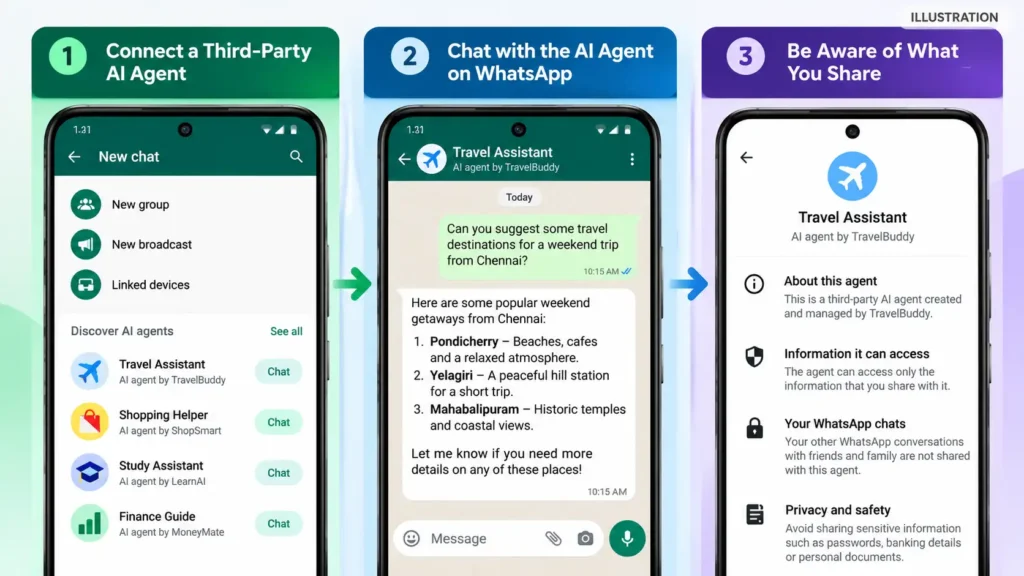
One important point is that connecting an agent does not give it unrestricted access to your WhatsApp account. WhatsApp states that third-party agents can access only the information that you share with them.
This means your normal conversations with friends, family and other contacts are not automatically shared with the agent simply because you connect one.
The way WhatsApp Third-Party AI Agents operate is different from Meta AI and regular WhatsApp chats. WhatsApp’s official terms explain how these independent third-party agents connect to the platform.
What Can Third-Party AI Agents Access?
This is one of the most important things users should understand before trying the feature.
A third-party AI agent can access information that you send or share with it. For example, if you send a question, document, image or other information as part of the interaction, that information may be processed by the agent provider.
However, the agent does not automatically receive access to all your WhatsApp conversations.
WhatsApp’s official Help Center specifically states that third-party agents will only be able to access what users share with them.
Even with this limitation, users should avoid sending sensitive information unless it is genuinely necessary. Passwords, banking information, verification codes, private documents and other confidential details should not be shared with an unfamiliar AI service.
Are WhatsApp Third-Party AI Agents End-to-End Encrypted?
Privacy is the most important difference between normal WhatsApp chats and conversations with third-party AI agents.
WhatsApp says that personal messages and calls between users are protected by end-to-end encryption. However, conversations with third-party agents are not considered end-to-end encrypted.
According to WhatsApp’s current Third-Party Agent Terms, the agent provider receives, processes and stores messages in unencrypted form as part of operating the service. The exact handling of that information depends on the individual agent provider’s practices.
This does not mean that a third-party agent can suddenly read your private WhatsApp chats. The important distinction is that the messages you intentionally send to the agent are handled differently from ordinary personal WhatsApp conversations.
For this reason, users should treat a third-party AI agent more like an external online service than a private WhatsApp contact.
Who Is Responsible for a Third-Party AI Agent?
WhatsApp makes an important distinction between its platform and the companies operating these agents.
Third-party AI agents are independently created and operated by their respective providers. WhatsApp provides the platform that allows them to communicate with users, but it does not verify, endorse or guarantee the quality, accuracy or services offered by every agent.
This means users should check the company or developer behind an agent before using it.
The agent provider is responsible for the content and accuracy of its AI responses, actions taken by the agent, and its own data-handling and privacy practices.
The provider may also have its own terms of service and privacy policy. Users should review those policies before connecting an unfamiliar agent.
How Many Third-Party AI Agents Can You Connect?
WhatsApp currently allows users to connect up to five third-party AI agents at the same time.
If you have already reached the limit, you need to remove an existing connection before adding another agent. WhatsApp also states that it may change this limit in the future.
The ability to connect multiple agents could be useful if different services offer different functions. For example, one agent may be designed for a specific business service while another could provide a different AI-powered experience.
Is the Feature Available to Everyone?
The availability of WhatsApp AI experiences can vary depending on the feature, country, account and rollout status.
WhatsApp’s official documentation notes that some AI experiences may be available only in limited countries or to certain users. Therefore, not seeing a particular AI or agent option on your account does not necessarily mean there is a problem with your phone.
WhatsApp can also modify, limit or discontinue access to the third-party agent platform. Users should therefore check the latest WhatsApp information rather than relying on older screenshots or instructions found online.
What Should You Check Before Connecting an AI Agent?
Before using a third-party AI agent, there are a few simple precautions worth following.
First, find out who created and operates the agent. Do not assume that an agent is officially provided by WhatsApp just because it works inside WhatsApp.
Second, read the provider’s privacy policy. Pay attention to what information is collected, how messages are processed and whether information is stored.
Third, avoid sharing highly sensitive information. An AI agent may be useful for answering questions or completing specific tasks, but that does not mean it should receive passwords, banking details or private verification codes.
Finally, remember that WhatsApp’s ability to connect an agent does not mean WhatsApp is endorsing that particular service. The company’s official terms explicitly state that third-party agents are independent services.
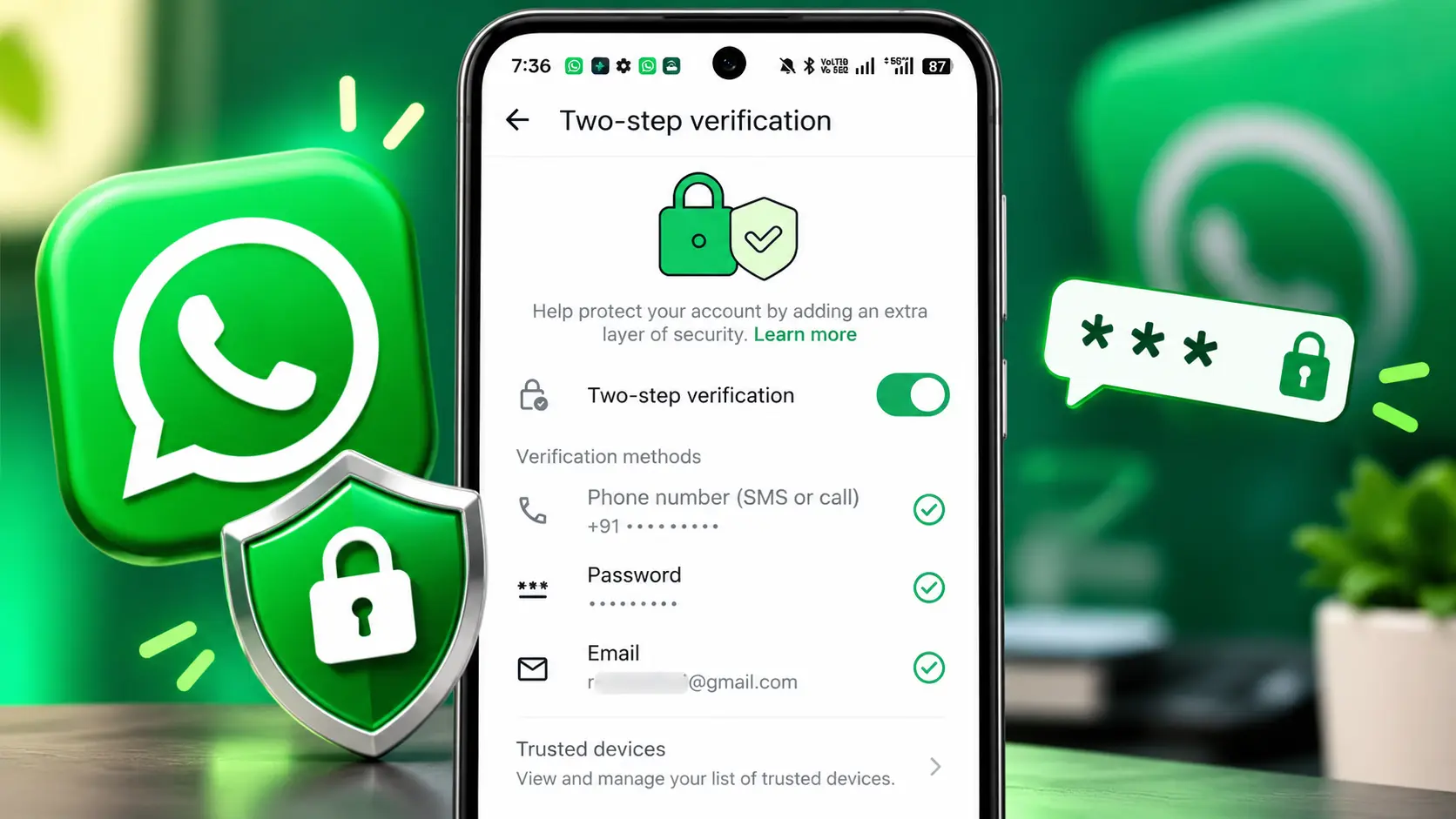
For another layer of WhatsApp account security, you can also read our WhatsApp Two-Step Verification Password.
WhatsApp Third-Party AI Agents: Final Thoughts
WhatsApp Third-Party AI Agents represent another step toward bringing AI services directly into everyday messaging. Instead of switching between WhatsApp, websites and separate AI applications, users can interact with compatible agents through a WhatsApp conversation.
The feature also gives developers more ways to build AI-powered experiences that users can access through a familiar messaging platform.
However, privacy should remain a major consideration. Third-party agents are operated by independent providers, and conversations with these agents are not treated as end-to-end encrypted personal WhatsApp chats.
The safest approach is simple: know who operates the agent, understand its privacy policy and share only the information necessary for the task.
As WhatsApp continues expanding its AI features, third-party agents could become a more common part of the platform. For users, the most important thing is to understand how the feature works and what happens to the information they choose to share before using it.